
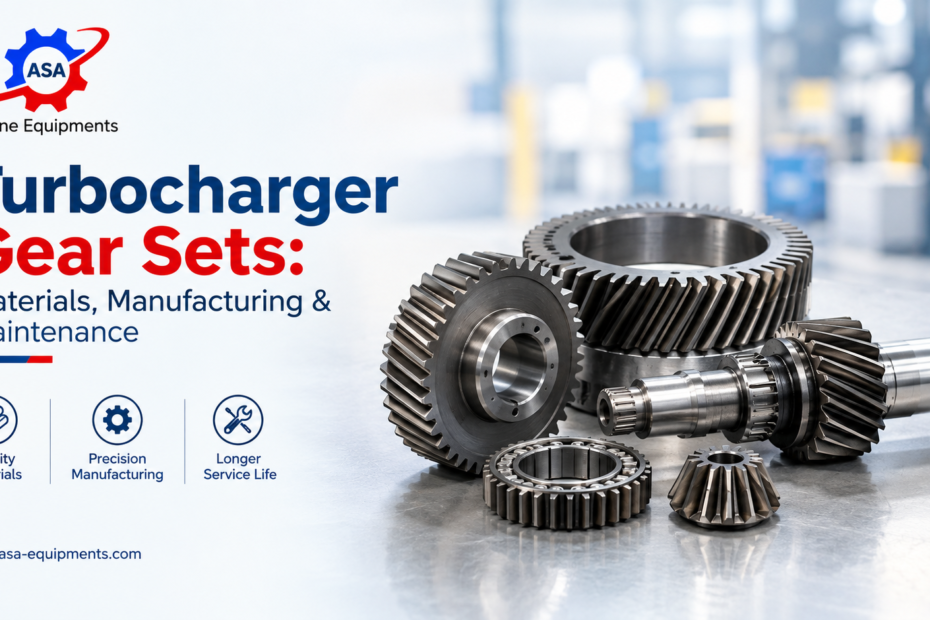
Turbocharger gear sets are a specialized component in gear-driven turbocharger systems. These systems are used across many diesel locomotive engines. Unlike purely exhaust-driven turbochargers, gear-driven units rely on a precision gear train. This gear train synchronizes turbocharger speed with engine operation. It matters most during startup and low-RPM conditions. For railroad operators, rebuilders, and maintenance teams, understanding turbocharger gear sets is essential. Knowing their materials, manufacturing standards, and maintenance needs supports reliable locomotive performance.
This guide covers everything you need to know about turbocharger gear sets. We’ll look at how they’re built and best practices for keeping them running smoothly.
What Are Turbocharger Gear Sets?
Turbocharger gear sets are precision-machined gear assemblies. They mechanically link the turbocharger to the engine’s crankshaft or gear train. This connection lets the engine drive the turbocharger directly during low-exhaust conditions. Startup and idle are common examples. This happens before exhaust gas flow becomes strong enough to sustain boost on its own.
This hybrid approach combines mechanical drive with exhaust-driven power. It helps eliminate turbo lag, a common issue in purely exhaust-driven systems. A well-manufactured set of turbocharger gear sets ensures smooth power delivery. This matters across the entire RPM range. It’s particularly important for locomotives that must generate strong torque from a standstill.
EMD, ALCO, and GE locomotive engines each use different turbocharging configurations. Sourcing the correct gear sets for a specific engine series is critical. This ensures proper synchronization and boost timing.
Materials Used in Turbocharger Gear Sets
Forged Alloy Steel
Most turbocharger gear sets are manufactured from forged alloy steel. This material offers an excellent strength-to-weight ratio. It also resists fatigue under repeated load cycles. Forging aligns the steel’s grain structure. This makes gear teeth more resistant to cracking and wear compared to cast alternatives.
Case-Hardened Surfaces
Gear teeth typically undergo case hardening. This heat treatment process hardens the outer surface. It keeps the core more ductile at the same time. This combination allows turbocharger gear sets to withstand high contact stress. They resist shock loading without becoming brittle.
Corrosion-Resistant Coatings
Gear sets sit close to hot exhaust components. They face varying temperatures too. Many gear sets receive corrosion-resistant coatings or platings. This helps prevent surface degradation. It stops pitting or gear tooth failure before it starts.
Precision Bearings and Bushings
Bearings and bushings support the gear assembly. These are often made from hardened steel or bronze alloys. Manufacturers choose these materials for their ability to handle high rotational speeds with minimal friction.
Manufacturing Process of Turbocharger Gear Sets
Gear Cutting and Hobbing
The manufacturing process begins with precision gear cutting. Hobbing machines shape the gear teeth to exact tooth profiles. Accuracy at this stage matters a lot. It directly affects how smoothly the turbocharger gear sets mesh during operation.
Heat Treatment
After initial machining, gears undergo controlled heat treatment. This achieves the desired hardness profile. This step is critical. Improper heat treatment can cause warping. It can also reduce fatigue resistance or lead to premature failure under load.
Grinding and Finishing
Gears get precision-ground after heat treatment. This achieves tight tolerances and a smooth surface finish. It reduces noise, vibration, and friction between meshing gear teeth. This extends the operational life of the component.
Quality Inspection
Reputable manufacturers test turbocharger gear sets rigorously. This includes dimensional checks and hardness testing. Some use non-destructive testing methods too, like magnetic particle inspection. This detects subsurface flaws before parts leave the factory.
Function of Turbocharger Gear Sets in Locomotive Engines
Turbocharger gear sets play a supporting but essential role. They work within the broader turbocharging system. During low-RPM conditions, the gear train mechanically drives the turbocharger shaft. This generates boost pressure before exhaust flow alone could sustain it. As engine speed increases, exhaust energy rises too. The system then transitions to relying primarily on exhaust-driven rotation.
This synchronized handoff depends on well-engineered turbocharger gear sets. It helps locomotives deliver consistent torque and power output. This holds true even under heavy load conditions typical of freight hauling.
Technical Specifications to Consider
When selecting or replacing turbocharger gear sets, check these specifications:
- Gear ratio – Must match the specific engine platform’s timing requirements.
- Material grade – Forged alloy steel with proper case hardening ensures durability.
- Tooth profile and tolerance – Precision machining reduces noise and mechanical wear.
- Bearing and bushing compatibility – Must support the gear set’s rotational speed and load.
- Surface treatment – Coatings should match the engine’s operating environment and temperature range.
Choose turbocharger gear sets that meet OEM specifications and ISO quality standards. This ensures reliable synchronization and long-term durability across your fleet.
Maintenance Best Practices for Turbocharger Gear Sets
Regular Lubrication
Turbocharger gear sets depend on consistent, clean lubrication. This minimizes friction and heat buildup between meshing teeth. Contaminated oil is a leading cause of premature gear wear.
Inspection for Wear Patterns
Routine inspection of gear teeth reveals early signs of trouble. Pitting, scoring, or uneven wear are common warning signs. Catching these issues early allows for targeted repair of turbocharger gear sets. This happens before they cause broader turbocharger system failure.
Monitoring for Unusual Noise
A whining, grinding, or clicking noise often signals gear wear or misalignment. It usually comes from the turbocharger area. Addressing this promptly prevents more extensive damage to the gear train and connected components.
Checking Backlash and Alignment
Excessive backlash between meshing gears can lead to impact loading. This accelerates wear over time. Periodic alignment checks help maintain proper gear engagement. This reduces mechanical stress on turbocharger gear sets.
Scheduled Replacement of Wear Components
Bearings and bushings support the gear assembly. They face continuous mechanical stress. Replace these components on a scheduled basis. Don’t wait for failure. This protects the more expensive gear set itself from secondary damage.
Common Signs of Turbocharger Gear Set Failure
Unusual mechanical noise during startup or low-RPM operation often points to trouble. Gear wear or misalignment are common causes. Reduced boost response at low engine speeds is another sign. It can indicate the mechanical drive portion isn’t functioning properly. In more advanced cases, visible metal shavings appear in the lubrication system. This signals significant gear tooth wear or damage.
Identifying these warning signs early matters. It allows for targeted repair of turbocharger gear sets. This beats requiring a full turbocharger system overhaul.
Why Quality Turbocharger Gear Sets Matter
Locomotive turbocharger systems face demanding conditions. High rotational speeds, constant load cycling, and extreme heat all take a toll. Substandard materials or imprecise manufacturing cause problems. This leads to premature wear, reduced synchronization accuracy, or costly downstream engine damage.
This is why operators rely on trusted suppliers. They choose ones who manufacture components to strict OEM specifications. Precision-engineered turbocharger gear sets deliver reliability. Proper alloy grades and tight manufacturing tolerances make the difference for demanding freight and passenger operations.
Conclusion
Turbocharger gear sets play a specialized but critical role. They support gear-driven turbocharger systems. Locomotives achieve smooth, lag-free power delivery because of them. This holds true across all operating conditions. Material selection, precision manufacturing, and ongoing maintenance all affect long-term reliability.
Understanding these components helps operators make better decisions. Knowing the materials, manufacturing process, and maintenance requirements matters. Railroad operators and rebuilders can extend equipment life this way. They reduce unplanned downtime too. Partner with an experienced supplier for OEM-quality turbocharger gear sets. Your fleet stays powered and reliable for years to come.