
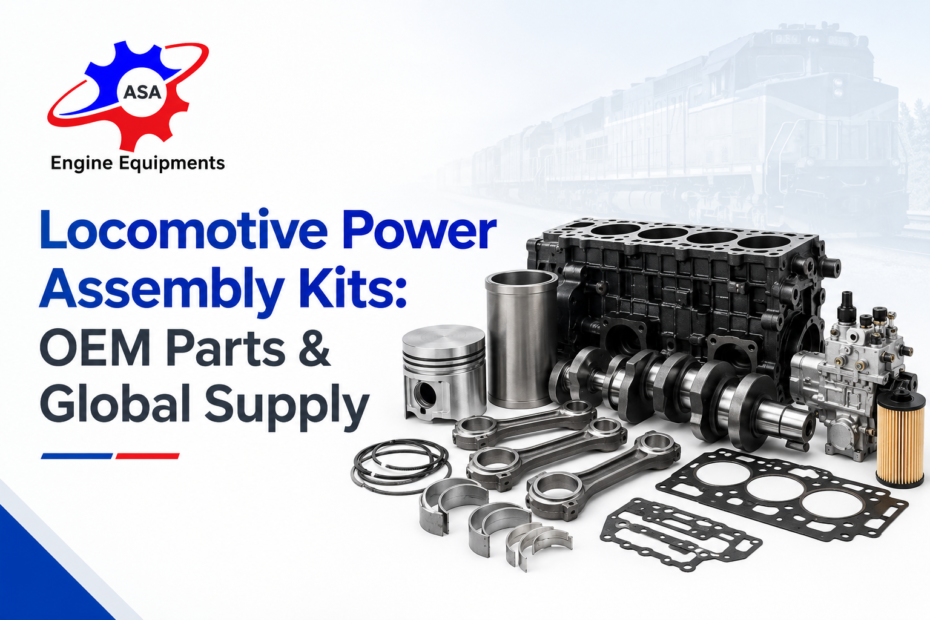
Locomotive Power Assembly Kits are essential components that keep diesel and diesel-electric locomotives running with maximum efficiency. These kits combine several critical engine parts into a single, matched set designed to restore or maintain peak cylinder performance. For railroad operators, rebuilders, and maintenance teams, understanding locomotive power assembly kits — their components, specifications, and sourcing considerations — is key to reducing downtime and extending engine life.
In this guide, we cover everything you need to know about locomotive power assembly kits, from their core components to global sourcing best practices.
What Are Locomotive Power Assembly Kits?
Locomotive power assembly kits are complete sets of matched engine parts used to rebuild or replace a locomotive’s power cylinder unit. Each kit typically includes a piston, piston pin, piston rings, connecting rod, and cylinder liner, all engineered to work together as a single functional unit.
Using a matched Locomotive Power Assembly Kit — rather than sourcing individual parts separately — ensures proper fit, balance, and long-term reliability. Because ALCO, EMD, and GE platforms each require different configurations, selecting the correct kit for a specific engine model is critical to restoring OEM-level performance across your fleet.
Types of Locomotive Power Assembly Kits
Piston and Connecting Rod Assemblies
The piston and connecting rod assembly is the heart of any locomotive power assembly kit. The piston transfers combustion force to the connecting rod, which in turn drives the crankshaft. Precision balancing between these two parts is essential, as any misalignment can cause excessive vibration and premature wear.
Cylinder Liners and Piston Kits
The cylinder liner and piston kit form the combustion chamber where fuel ignition takes place. Cylinder liners must withstand extreme heat, pressure, and friction cycle after cycle. Pairing a properly honed liner with a matched piston ensures optimal sealing and reduces oil consumption.
Piston Rings
Piston rings maintain the seal between the piston and cylinder liner, preventing combustion gases from escaping into the crankcase. A complete locomotive power assembly kit includes rings matched to the exact bore specification of the liner for consistent compression.
Piston Pins and Bushings
Piston pins connect the piston to the connecting rod, allowing controlled articulation during the combustion cycle. High-quality bushings reduce friction at this connection point, which is critical given the constant heat and load these parts endure.
Gaskets and Seals
Every locomotive power assembly kit includes gaskets and seals designed to prevent oil and coolant leaks at the cylinder head and liner interfaces. Proper sealing is essential for maintaining compression and preventing coolant contamination in the combustion chamber.
Technical Specifications to Consider
When selecting Locomotive Power Assembly Kits, several specifications determine compatibility and performance:
- Bore and stroke – Must match the exact engine model specification.
- Material grade – Forged pistons and hardened liners resist fatigue under continuous thermal cycling.
- Ring pack configuration – Determines compression sealing and oil control.
- Compatibility – Kits must align with OEM specifications for ALCO, EMD, or GE engine families.
- Compression ratio – Affects fuel efficiency and combustion performance.
Sourcing kits that meet ISO 9001:2015 quality standards ensures every component performs reliably under demanding operating conditions.
Maintenance Best Practices for Power Assembly Kits
Proper maintenance extends the service life of locomotive power assembly kits and prevents unplanned engine downtime.
Regular Inspection
Routine inspection of pistons, rings, and liners helps identify early signs of scoring, wear, or carbon buildup before they affect engine performance.
Lubrication Management
Consistent, clean lubrication reduces friction between the piston and cylinder liner. Contaminated oil accelerates wear on rings and liners, shortening the lifespan of the kit.
Compression Testing
Periodic compression testing helps detect ring wear or liner damage early. A drop in compression often signals it’s time to inspect or replace the power assembly kit.
Cooling System Checks
Since cylinder liners rely on proper cooling to manage combustion heat, regular coolant system checks help prevent liner cracking and thermal distortion.
Sourcing Reliable Replacement Kits
Delays in sourcing the correct kit often extend downtime more than the repair itself. Working with an experienced supplier ensures faster turnaround and consistent OEM-equivalent quality.
Why Component Quality Matters
Locomotive power assembly kits operate under extreme heat, pressure, and mechanical stress with every combustion cycle. Substandard materials or imprecise machining can lead to premature ring wear, liner scoring, or piston failure — all of which risk costly engine damage.
This is why railroad operators and rebuilders rely on suppliers who combine engineering expertise with strict quality control. Kits manufactured to OEM specifications, using proper alloy grades and precision machining, deliver the reliability needed for demanding freight and passenger operations.
Global Supply and Sourcing Considerations
Locomotive fleets operate across diverse regions and climates, from North America to Europe, Australia, and beyond. This makes consistent global parts availability essential for operators managing multi-location fleets. A dependable supply chain helps operators avoid extended downtime regardless of where their locomotives run.
Conclusion
Locomotive Power Assembly Kits form the core of every diesel engine’s combustion system. From pistons and connecting rods to cylinder liners and rings, each component plays a critical role in converting fuel energy into reliable mechanical power.
By understanding the types, specifications, and maintenance requirements of locomotive power assembly kits, railroad operators and rebuilders can extend engine life, reduce unplanned downtime, and maintain peak locomotive performance. Partnering with an experienced supplier ensures your fleet stays running for years to come.