
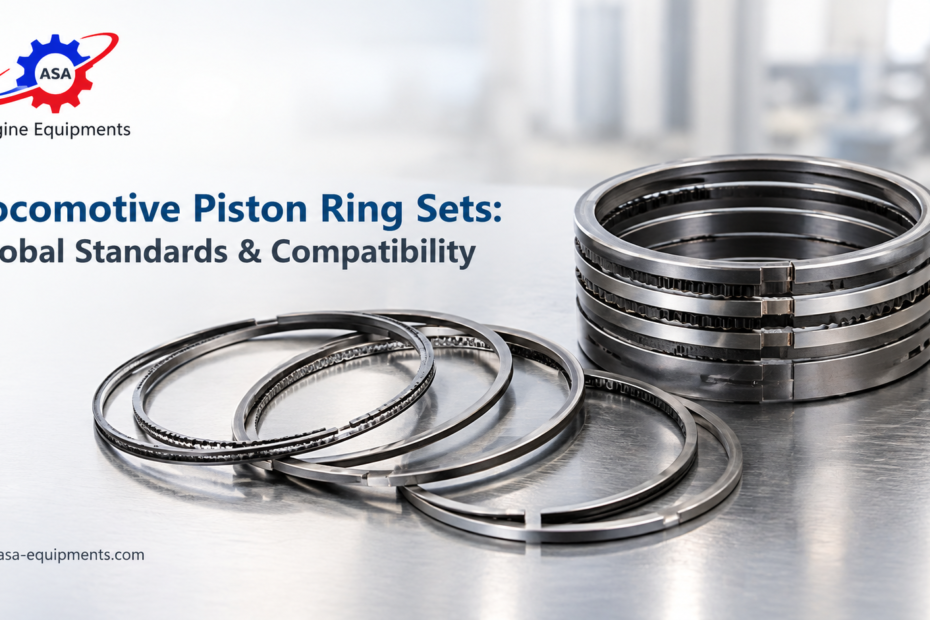
Locomotive piston ring sets are among the most critical wear components in a diesel engine. They directly influence compression, oil control, and combustion efficiency. Fleets operate across different countries, climates, and engine platforms. Ensuring piston ring compatibility with global standards has become essential for railroad operators and rebuilders alike. This guide explores the types, specifications, and compatibility considerations that matter most. It covers sourcing piston ring sets for EMD, ALCO, and GE locomotive engines.
Whether you’re maintaining a domestic fleet or managing locomotives across multiple regions, understanding locomotive piston ring sets helps. It ensures consistent performance and reduced downtime.
What Are Locomotive Piston Ring Sets?
Locomotive piston ring sets are precision-engineered metal rings. They fit around the piston, forming a seal between the piston and cylinder wall. Each set typically includes compression rings and oil control rings. Together, they maintain proper combustion pressure while regulating lubrication within the cylinder.
These components must withstand extreme heat and high-speed reciprocating motion. They also face constant friction throughout the engine’s operating life. A properly matched set of locomotive piston ring sets ensures efficient fuel combustion. It reduces oil consumption and protects the cylinder liner from premature wear.
Function of Piston Ring Sets in Locomotive Engines
Piston rings serve three primary functions within the engine. First, compression rings seal the combustion chamber. They prevent gases from leaking past the piston into the crankcase. Second, oil control rings regulate the amount of lubricating oil on the cylinder wall. This prevents excess oil from entering the combustion chamber. Third, the rings help transfer heat away from the piston to the cylinder wall.
When locomotive piston ring sets are worn or improperly matched, problems arise. Compression loss and oil consumption can increase significantly. This leads to reduced power output and higher emissions.
Types of Locomotive Piston Ring Sets
Compression Rings
Compression rings sit closest to the combustion chamber. They handle the highest thermal and pressure loads. These rings are typically manufactured from cast iron or steel alloys. Specialized coatings, such as chrome or molybdenum, help resist wear and scuffing.
Oil Control Rings
Oil control rings sit below the compression rings. They scrape excess oil from the cylinder wall and return it to the crankcase. Proper design prevents oil from entering the combustion chamber. This reduces carbon buildup and blue exhaust smoke.
Scraper Rings
Some locomotive engines use an intermediate scraper ring. It provides additional oil control and pressure sealing. These are common in high-output EMD and ALCO engine configurations. Extra sealing capacity is often needed in these setups.
Global Standards for Piston Ring Manufacturing
Locomotive fleets often operate across multiple countries. Adherence to international manufacturing standards becomes critical. Reputable suppliers manufacture locomotive piston ring sets according to ISO 9001:2015 standards. This ensures consistent material composition, dimensional accuracy, and performance testing.
Global standards also cover material traceability and surface coating specifications. Tolerance requirements matter too. Operators can source replacement parts confidently this way. It doesn’t matter where locomotives were originally manufactured or where they currently operate.
Compatibility Considerations Across Engine Platforms
EMD Compatibility
EMD locomotive engines include the 567, 645, and 710 series. They require piston ring sets matched precisely to bore diameter and ring groove dimensions. Using incorrect specifications can lead to blow-by. Reduced compression and accelerated wear often follow.
ALCO Compatibility
ALCO engines, such as the 251 series, differ from EMD platforms. They often use different ring thicknesses and coating requirements. Verifying exact OEM specifications matters. This ensures proper sealing and prevents premature ring failure.
GE Compatibility
GE 7FDL series engines typically operate at higher compression ratios. They require locomotive piston ring sets engineered with more robust materials. This helps them withstand increased thermal and mechanical stress.
Key Specifications to Evaluate
When sourcing piston ring sets, check these specifications:
- Ring diameter and thickness – Must match the exact bore size and groove dimensions.
- Material composition – Cast iron, ductile iron, or steel alloys affect durability.
- Surface coating – Chrome-plated or molybdenum-coated rings offer wear resistance.
- Ring tension – Proper tension ensures adequate sealing without excessive friction.
- Gap clearance – Correct end-gap spacing accommodates thermal expansion.
Sourcing locomotive piston ring sets that meet these specifications helps. It maintains consistent compression and extends engine component life.
Signs of Worn or Incompatible Piston Ring Sets
Increased Oil Consumption
Excessive oil usage often indicates worn oil control rings. These rings can no longer effectively regulate lubrication on the cylinder wall.
Loss of Compression
A noticeable drop in engine power signals a problem. This is often confirmed through compression testing. It frequently points to worn or damaged compression rings.
Blue or Excessive Exhaust Smoke
Blue smoke typically signals oil entering the combustion chamber due to ring wear. Excessive black smoke may indicate incomplete combustion. This often links back to compression loss.
Increased Blow-By
Excessive crankcase pressure can be a warning sign. Visible blow-by at the breather can indicate a problem too. Piston rings may no longer be sealing effectively against the cylinder wall.
Maintenance Tips for Piston Ring Longevity
Routine oil analysis helps detect early signs of ring wear. This happens before performance issues become severe. Monitoring compression levels during scheduled maintenance helps too. Operators can identify degrading locomotive piston ring sets before they cause power loss.
Using properly filtered fuel and oil matters. It reduces abrasive contamination that can accelerate wear. Following correct break-in procedures after ring replacement is important. This ensures proper seating and long-term sealing performance.
Why Global Compatibility Matters for Fleet Operators
Railroad operators manage locomotives across multiple regions. They benefit from working with suppliers who understand international compatibility needs. A manufacturer experienced in supplying locomotive piston ring sets brings real value. This includes suppliers serving markets across the USA, Europe, Australia, and beyond.
This global capability reduces risk. Operators avoid receiving mismatched or substandard components. This matters most for older EMD, ALCO, and GE engine models. Original specifications must be replicated precisely, even when engines are no longer in active production.
Conclusion
Locomotive piston ring sets play an essential role in engine performance. They maintain compression, control oil consumption, and ensure efficient combustion. This applies across diesel locomotive platforms. Understanding the types and specifications helps operators. Global compatibility standards matter too for informed sourcing decisions.
Partner with a supplier who manufactures piston ring sets to strict international standards. This helps fleet operators reduce unplanned downtime. It extends engine life and maintains reliable performance. This applies across EMD, ALCO, and GE locomotive engines worldwide.