
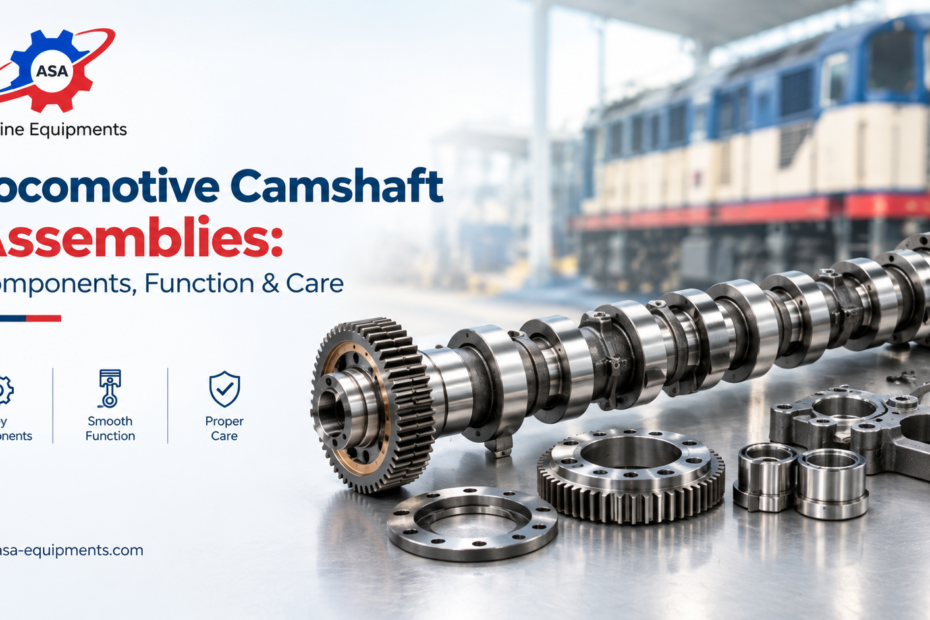
Locomotive camshaft assemblies are essential to the precise timing and operation of diesel locomotive engines. They control the opening and closing of intake and exhaust valves, ensuring fuel combustion happens at exactly the right moment in the engine cycle. For railroad operators, rebuilders, and maintenance teams, understanding locomotive camshaft assemblies — their components, function, and care requirements — is critical to keeping engines running smoothly and efficiently.
This guide covers everything you need to know about locomotive camshaft assemblies, from how they work to best practices for long-term durability.
What Are Locomotive Camshaft Assemblies?
Locomotive camshaft assemblies refer to the complete set of components responsible for controlling valve timing within a diesel engine. This includes the camshaft itself, cam lobes, followers, gears or drive linkages, and supporting bearings that allow the shaft to rotate smoothly within the engine block.
Together, these parts form the mechanical link between the engine’s crankshaft and its valve system. A properly functioning set of locomotive camshaft assemblies ensures valves open and close at precisely the right moment, directly affecting engine efficiency, power output, and fuel consumption.
Because EMD, ALCO, and GE locomotive platforms each use different camshaft configurations, sourcing the correct parts for a specific engine series is critical to maintaining proper valve timing and overall performance.
Components of Locomotive Camshaft Assemblies
Camshaft
The camshaft is a long, rotating shaft fitted with precisely machined lobes along its length. Each lobe corresponds to a specific valve, and its shape determines exactly when and how far that valve opens during the engine cycle.
Cam Lobes
Cam lobes are the raised sections along the camshaft that push against valve followers to open intake and exhaust valves. Lobe profile and lift height are engineered specifically for each engine platform to optimize airflow and combustion timing.
Followers and Lifters
Followers, sometimes called lifters, ride along the cam lobes and transfer motion to the valve train. These components must be manufactured to tight tolerances, as excessive wear here directly affects valve timing accuracy within locomotive camshaft assemblies.
Drive Gears and Linkages
Camshafts are synchronized with the crankshaft through gears, chains, or drive linkages. This synchronization ensures valves open and close in perfect coordination with piston movement, which is essential for proper combustion timing.
Bearings and Supports
Camshaft bearings support the shaft as it rotates at high speed, reducing friction and wear. These bearings require consistent lubrication, as they are among the more failure-prone components within locomotive camshaft assemblies due to constant rotational stress.
Function of Locomotive Camshaft Assemblies in Diesel Engines
The core function of locomotive camshaft assemblies is to control valve timing with precision. As the crankshaft rotates, it drives the camshaft through a gear or chain connection. The camshaft then rotates in sync, with each lobe pushing against its corresponding follower to open the appropriate valve at the correct point in the combustion cycle.
This precise timing allows fuel and air to enter the cylinder at the optimal moment and exhaust gases to exit efficiently afterward. Reliable locomotive camshaft assemblies are essential for maintaining consistent combustion across all cylinders, which directly impacts horsepower, fuel efficiency, and emissions control.
Technical Specifications to Consider
When selecting or replacing locomotive camshaft assemblies, several specifications determine compatibility and performance:
- Lobe profile and lift – Must match the engine’s designed valve timing and airflow requirements.
- Material grade – Forged or billet steel construction affects durability under continuous operation.
- Bearing tolerances – Precise fitment reduces friction and prevents premature wear.
- Gear or chain synchronization – Drive components must align exactly with crankshaft timing.
- Compatibility – Parts must match OEM specifications for EMD, ALCO, or GE engine platforms.
Sourcing locomotive camshaft assemblies that meet OEM specifications and strict quality standards ensures consistent valve timing and reliable engine performance across your fleet.
Care and Maintenance of Locomotive Camshaft Assemblies
Regular Lubrication
Camshaft bearings and lobes depend on consistent, clean lubrication to minimize friction and prevent premature wear. Contaminated or degraded oil is a leading cause of accelerated wear in locomotive camshaft assemblies.
Inspecting Lobe Wear
Cam lobes gradually wear down over time due to constant contact with followers. Routine inspection helps identify flattened or pitted lobes before they cause significant valve timing issues.
Checking Gear and Chain Tension
Drive gears or chains that synchronize the camshaft with the crankshaft must maintain proper tension. Excessive slack can throw off valve timing, reducing engine efficiency and potentially causing damage.
Monitoring Valve Clearance
Valve clearance adjustments should be performed on a scheduled basis. Incorrect clearance places additional stress on locomotive camshaft assemblies and can accelerate wear on both the camshaft and valve train components.
Vibration and Noise Monitoring
Unusual ticking or knocking noises often indicate developing issues within the camshaft assembly, such as worn lobes or failing bearings. Early detection through routine monitoring helps prevent more extensive engine damage.
Common Signs of Camshaft Assembly Wear
A noticeable drop in engine performance or uneven idling can point to worn cam lobes or timing misalignment. Unusual noises, particularly ticking sounds synchronized with engine RPM, often signal follower or bearing wear within the camshaft assembly.
Increased fuel consumption without other obvious causes can also indicate improper valve timing due to worn locomotive camshaft assemblies. Identifying these signs early allows for targeted repairs rather than requiring full engine teardown.
Why Quality Camshaft Assemblies Matter
Locomotive engines operate under continuous, demanding conditions — high rotational speeds, constant load cycling, and extended duty hours. Substandard camshaft assemblies, whether due to poor material quality or imprecise machining, can lead to inconsistent valve timing, reduced efficiency, or premature engine failure.
This is why railroad operators and rebuilders rely on suppliers who manufacture locomotive camshaft assemblies to strict OEM specifications. Precision-engineered components, built from proper alloy grades and machined to tight tolerances, deliver the reliability needed for demanding freight and passenger operations.
Global Sourcing Considerations
Locomotive fleets operate across diverse regions and climates, from North America to Europe, Australia, and beyond. A dependable supply chain for locomotive camshaft assemblies ensures operators can source compatible components quickly, minimizing downtime regardless of where their locomotives run or which engine platform they use.
Conclusion
Locomotive camshaft assemblies are fundamental to precise valve timing and efficient combustion in diesel locomotive engines. From the camshaft itself to cam lobes, followers, and drive gears, each component plays a critical role in synchronizing valve operation with the engine cycle.
By understanding the components, function, and care requirements of locomotive camshaft assemblies, railroad operators and rebuilders can extend equipment life, reduce unplanned downtime, and maintain peak locomotive performance. Partnering with an experienced supplier for OEM-quality locomotive camshaft assemblies ensures your fleet stays running smoothly for years to come.