
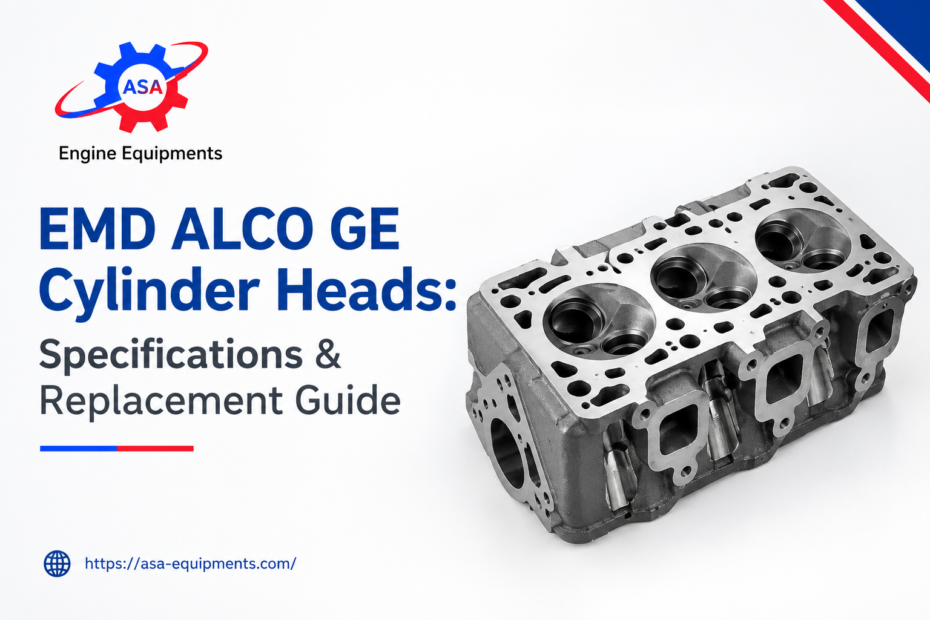
Cylinder heads are one of the most critical components in any diesel locomotive engine. They seal the combustion chamber. They also house the valve mechanism. And they manage the intense heat and pressure of each engine cycle. For railroad operators and rebuilders working with EMD, ALCO, and GE locomotives, choosing the right cylinder heads matters. It directly affects engine performance, fuel efficiency, and overall reliability.
This guide covers everything you need to know about EMD ALCO GE cylinder heads. We’ll look at their function, specifications, and how to approach replacement.
What Are Cylinder Heads?
Cylinder heads sit at the top of the engine block. They seal off the combustion chamber where fuel and air mix and ignite. They house essential components too. This includes intake and exhaust valves, valve springs, and in many locomotive engines, fuel injectors.
Cylinder head design varies by engine series and cylinder configuration. Each manufacturer engineers its heads to match specific bore sizes, compression ratios, and cooling needs. Models are not interchangeable without proper verification.
Function of Cylinder Heads in Locomotive Engines
The primary role of cylinder heads is to contain combustion pressure. They also allow controlled intake and exhaust flow. Additionally, they form part of the engine’s cooling circuit. Internal passages carry coolant around the combustion area to prevent overheating.
A well-functioning set of cylinder heads keeps compression consistent across all cylinders. This impacts horsepower output, fuel consumption, and emissions. Cracking, warping, or valve seat wear can cause problems. These issues lead to compression loss, coolant leaks, or complete engine failure if left unaddressed.
Types of EMD ALCO GE Cylinder Heads
EMD Cylinder Heads
EMD locomotive engines include the 567, 645, and 710 series. Their cylinder heads are engineered for high durability. They handle continuous heavy-duty operation well. These heads typically have two intake and two exhaust valves per cylinder. They integrate precisely with EMD’s unique fuel injection system.
ALCO Cylinder Heads
ALCO engines, such as the 251 series, use a different valve arrangement. Their cooling passage design differs too. ALCO cylinder heads are built for specific thermal loads. They handle turbocharged applications common in ALCO-powered locomotives.
GE Cylinder Heads
GE locomotive engines include the 7FDL series. They require cylinder heads manufactured to tighter tolerances. This supports their higher compression ratios. GE heads often feature reinforced valve seats. These withstand extended duty cycles in freight and passenger service.
Key Specifications to Consider
When sourcing or replacing cylinder heads, check these specifications:
- Material composition – Cast iron or alloy construction affects heat dissipation and durability.
- Valve configuration – Number and arrangement of valves must match the original design.
- Compression ratio compatibility – Heads must align with the engine’s designed compression.
- Cooling passage design – Internal coolant channels must match OEM flow patterns.
- Bolt pattern and torque specifications – Incorrect fitment can cause gasket failure or warping.
Choose cylinder heads that meet OEM specifications and ISO quality standards. This ensures consistent performance across your fleet, whether you run EMD, ALCO, or GE platforms.
Common Signs You Need a Cylinder Head Replacement
Loss of Compression
A noticeable drop in engine power often points to cracked or warped cylinder heads. Uneven cylinder performance is another sign. A compression test across all cylinders can confirm this.
Coolant Leaks
Sometimes coolant levels drop without an external leak. The issue may be internal. This often signals that cylinder heads have developed cracks. Coolant can enter the combustion chamber or oil system.
Overheating
Persistent engine overheating can happen even after checking the radiator. This can indicate blocked or damaged cooling passages. These problems form within the cylinder heads themselves.
Visible Exhaust Smoke
White or blue smoke from the exhaust can signal a problem. Coolant or oil may be entering the combustion chamber. This often happens through damaged head gaskets or cracked cylinder heads.
Cylinder Head Replacement Process
Step 1: Diagnosis and Inspection
A thorough inspection comes first. This confirms whether the issue lies within the cylinder heads. It could also be elsewhere, like the gasket or block. Pressure testing and visual inspection for cracks are standard practices.
Step 2: Removal
The old cylinder head assembly is carefully removed. Associated components come off too. This includes valve covers, injectors, and rocker arms, depending on the engine platform.
Step 3: Surface Preparation
The engine block surface must be cleaned first. It needs checking for flatness before installing a new head. Any warping in the block requires correction. This ensures a proper seal.
Step 4: Installation
New or remanufactured cylinder heads get installed next. OEM-specified gaskets and torque sequences are used. Bolt torque must follow the correct pattern and sequence. This avoids uneven stress on the head.
Step 5: Testing
After installation, the engine undergoes testing. A compression test confirms proper sealing. A run-in period follows. This verifies performance before returning to full service.
Maintenance Tips to Extend Cylinder Head Life
Regular coolant system checks help prevent overheating-related damage. Maintaining proper coolant mixture and flow reduces thermal stress on the heads over time.
Scheduled valve adjustments catch early signs of wear. This happens before problems escalate into costly repairs. Using OEM-equivalent gaskets during maintenance matters too. It prevents premature failure caused by improper sealing.
Monitoring exhaust temperature and color helps as well. This can flag developing issues with the cylinder heads early. It happens before they cause unplanned downtime.
Why Sourcing Quality Cylinder Heads Matters
Locomotive engines operate under demanding conditions. High heat, constant vibration, and heavy load cycles take a toll. Substandard cylinder heads can lead to premature failure. This happens due to poor material quality or imprecise machining. The result is costly unplanned maintenance.
This is why operators across the USA, Europe, Australia, and beyond choose carefully. They rely on suppliers who manufacture cylinder heads to strict OEM specifications. Precision-engineered heads restore engine performance. They also extend the overall lifespan of the locomotive engine.
Conclusion
play a central role in locomotive engine performance. They seal combustion, manage heat, and house critical valve components. Whether you operate EMD, ALCO, or GE locomotives, understanding cylinder heads matters. Knowing their types, specifications, and replacement process helps you make informed decisions.
Recognizing early warning signs is key. Sourcing quality, OEM-compatible is equally important. Together, these steps help railroad operators minimize downtime. Your fleet stays reliable for years to come.