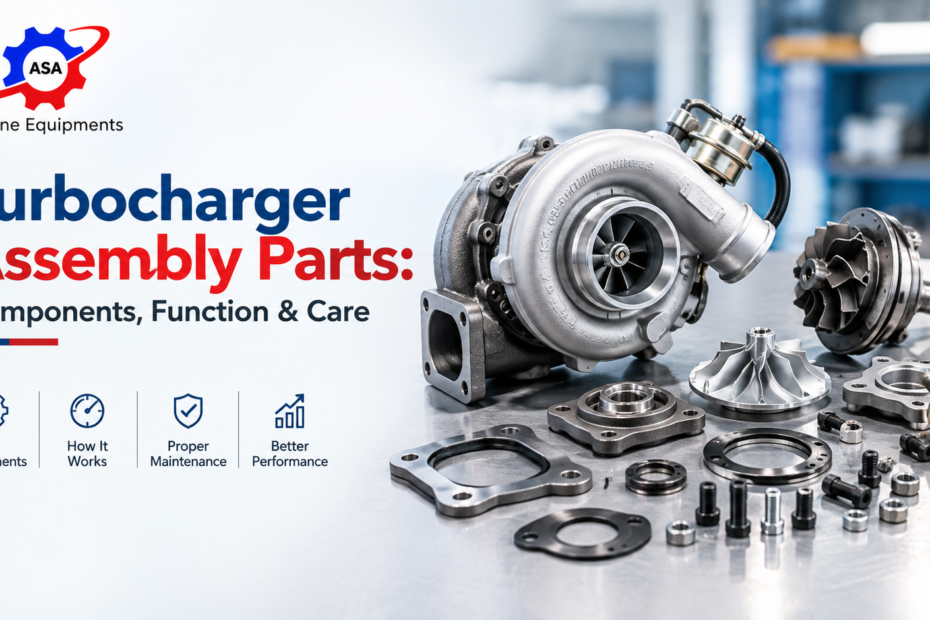
Turbocharger assembly parts play a vital role in maximizing the power and efficiency of diesel locomotive engines. By forcing more compressed air into the combustion chamber, these components allow engines to generate greater horsepower without increasing engine size. For railroad operators, rebuilders, and maintenance teams, understanding turbocharger assembly parts — their components, function, and care requirements — is essential for keeping locomotives running at peak performance.
This guide breaks down everything you need to know about turbocharger assembly parts, from how they work to best practices for long-term reliability.
What Are Turbocharger Assembly Parts?
Turbocharger assembly parts refer to the complete set of components that make up a locomotive’s turbocharging system. This includes the compressor wheel, turbine wheel, shaft and bearing assembly, housing, wastegate, and associated gear or drive components that link the turbocharger to the engine.
Together, these parts form a system that recycles exhaust energy to compress incoming air. A well-maintained set of turbocharger assembly parts improves fuel efficiency, boosts horsepower, and reduces harmful emissions compared to naturally aspirated engines.
Because EMD, ALCO, and GE locomotive platforms each use different turbocharger configurations, sourcing the correct parts for a specific engine series is critical to maintaining proper boost pressure and overall performance.
Components of Turbocharger Assembly Parts
Compressor Wheel
The compressor wheel draws in ambient air and compresses it before sending it into the engine’s intake manifold. This component must be precisely balanced, as even slight imperfections can cause vibration and premature bearing wear.
Turbine Wheel
The turbine wheel is driven by exhaust gases exiting the engine. It spins the connected shaft, which in turn drives the compressor wheel. Turbine wheels are built to withstand extremely high temperatures, often exceeding 600°C in continuous operation.
Shaft and Bearing Assembly
The shaft connects the turbine and compressor wheels, spinning at extremely high speeds — sometimes over 100,000 RPM. The bearing assembly supports this shaft, requiring constant lubrication to prevent friction-related damage. This is one of the most failure-prone turbocharger assembly parts due to the extreme speeds involved.
Turbocharger Housing
The housing encases the turbine and compressor wheels, directing exhaust and intake airflow efficiently. Housings are typically cast from heat-resistant alloys to withstand thermal cycling without cracking.
Wastegate and Boost Control Components
The wastegate regulates exhaust flow to the turbine, controlling boost pressure and preventing over-boosting, which can damage the engine. Properly functioning boost control components are essential turbocharger assembly parts for maintaining safe and consistent performance.
Turbocharger Gear Sets
In many locomotive engines, gear-driven turbochargers use a dedicated gear set to synchronize turbocharger speed with engine operation, particularly during startup and low-RPM conditions before exhaust-driven boost takes over.
Function of Turbocharger Assembly Parts in Locomotive Engines
Turbocharger assembly parts work together in a continuous cycle. Exhaust gases spin the turbine wheel, which drives the compressor wheel to force compressed air into the engine. This process increases the amount of oxygen available for combustion, allowing more fuel to be burned efficiently and producing significantly more power than the engine could generate on its own.
This function is especially important in locomotive engines, which must deliver high torque and sustained power output across long hauls. Reliable turbocharger assembly parts directly translate into better fuel economy and reduced engine strain over time.
Technical Specifications to Consider
When selecting or replacing turbocharger assembly parts, several specifications affect compatibility and performance:
- Boost pressure rating – Must match the engine’s designed operating range.
- Material grade – Turbine wheels require heat-resistant alloys; compressor wheels often use aluminum for lighter weight.
- Bearing type – Journal bearings or ball bearings affect durability and response time.
- Housing compatibility – A/R ratio and mounting configuration must match the specific engine platform.
- Gear ratio (for gear-driven units) – Must synchronize properly with engine RPM.
Sourcing turbocharger assembly parts that meet OEM specifications ensures consistent boost delivery and prevents premature component failure.
Care and Maintenance of Turbocharger Assembly Parts
Regular Lubrication Checks
The shaft and bearing assembly depends entirely on clean, consistent oil flow. Contaminated or insufficient lubrication is one of the leading causes of turbocharger failure, making oil quality monitoring a top maintenance priority.
Air Filtration Maintenance
Dirty or damaged air filters allow debris into the compressor wheel, causing erosion and imbalance. Keeping intake filtration systems clean protects these sensitive turbocharger assembly parts from premature wear.
Monitoring Exhaust Temperatures
Since turbine wheels operate under extreme heat, monitoring exhaust gas temperature helps identify early signs of turbocharger stress before catastrophic failure occurs.
Inspecting for Shaft Play
Excessive shaft movement, either axial or radial, often indicates bearing wear. Routine inspection can catch this early, preventing more extensive damage to the turbine and compressor wheels.
Cool-Down Procedures
Allowing the engine to idle briefly before shutdown lets the turbocharger cool gradually, preventing oil coking around the bearing assembly — a common cause of premature failure in turbocharger assembly parts.
Common Signs of Turbocharger Assembly Failure
Unusual whining or grinding noises often indicate bearing or shaft damage. A noticeable loss of power or boost pressure can point to a failing compressor or turbine wheel. Excessive exhaust smoke, particularly blue or black smoke, may signal oil leakage into the turbine housing or incomplete combustion due to reduced boost.
Identifying these warning signs early allows for targeted repair of specific turbocharger assembly parts rather than requiring a full unit replacement.
Why Quality Turbocharger Assembly Parts Matter
Locomotive turbochargers operate under some of the most demanding conditions in any mechanical system — extreme heat, high rotational speeds, and constant load cycling. Substandard materials or imprecise manufacturing in turbocharger assembly parts can lead to reduced efficiency, premature failure, or costly engine damage.
This is why railroad operators and rebuilders rely on suppliers who manufacture components to strict OEM specifications. Precision-engineered turbocharger assembly parts, built from proper heat-resistant alloys and manufactured to tight tolerances, deliver the durability needed for demanding freight and passenger operations.
Global Sourcing Considerations
Locomotive fleets operate across diverse climates and duty cycles, from North America to Europe, Australia, and beyond. A dependable supply chain for turbocharger assembly parts ensures operators can source compatible components quickly, minimizing downtime regardless of where their locomotives run or which engine platform they use.
Conclusion
Turbocharger assembly parts are essential to unlocking the full power potential of diesel locomotive engines. From compressor and turbine wheels to shaft and bearing assemblies, each component plays a critical role in delivering the boosted airflow that powers efficient combustion.
By understanding the components, function, and care requirements of turbocharger assembly parts, railroad operators and rebuilders can extend equipment life, reduce unplanned downtime, and maintain peak locomotive performance. Partnering with an experienced supplier for OEM-quality turbocharger assembly parts ensures your fleet stays powered and reliable for years to come.