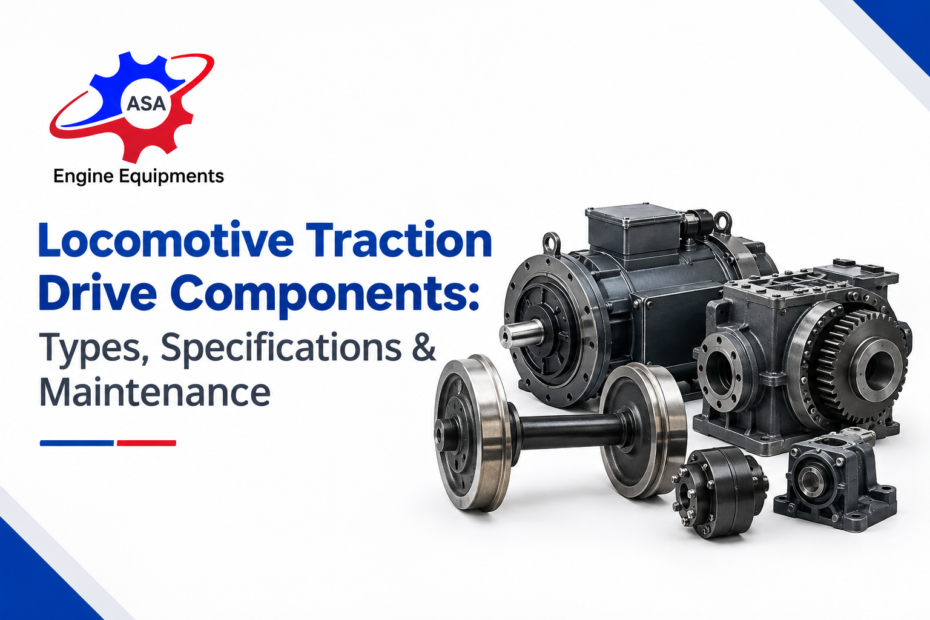
Locomotive traction drive components are the heart of any diesel or electric-diesel locomotive’s propulsion system. They convert the engine’s power into the force needed to move the wheels. This force drives heavy freight and passenger loads across long distances. For railroad operators, rebuilders, and maintenance teams, understanding locomotive traction drive components is essential. Knowing their types, specifications, and maintenance needs keeps fleets running safely and efficiently.
This guide covers everything you need to know about locomotive traction drive components. We’ll look at their function and best practices for long-term reliability.
What Are Locomotive Traction Drive Components?
Locomotive traction drive components are the parts that transmit power to the wheels. This includes the traction motor, gear and pinion sets, armature assemblies, suspension bearings, and axle drive units.
Together, these parts govern how efficiently a locomotive converts energy into motion. Well-engineered locomotive traction drive components improve haulage capacity. They also reduce wear on the engine, wheels, and track.
ALCO, EMD, and GE platforms each use different configurations. Sourcing the correct parts for a specific model is critical. This ensures OEM-level performance across your fleet’s locomotive traction drive components.
Types of Locomotive Traction Drive Components
Traction Motors
The traction motor is the primary power-conversion unit. It belongs to the broader family of locomotive traction drive components. In diesel-electric locomotives, the engine drives a generator. This generator supplies power to traction motors mounted on the axles. The motors then generate torque to turn the wheels.
Traction motors face continuous heavy loads, vibration, and heat. Durability and precision manufacturing are non-negotiable. This matters most when sourcing replacement locomotive traction drive components.
Traction Gears and Pinions
The gear and pinion assembly transfers force from the motor shaft to the axle. This gear set is one of the most heavily stressed locomotive traction drive components. It must handle constant torque while maintaining precise alignment.
Gear ratio affects tractive effort and top speed. Pinion and gear sets are matched to a locomotive’s duty. Some are built for high-speed passenger service. Others suit low-speed, high-tonnage freight hauling.
Armature Assemblies
The armature sits inside the traction motor. It interacts with the magnetic field to produce torque. This makes it one of the more delicate locomotive traction drive components. Windings, commutators, and bearings need tight tolerances. Even minor imbalances can cause premature failure.
Suspension Bearings and Axle Drive Units
Suspension bearings support the motor’s weight on the axle. They also allow slight movement over track irregularities. Axle drive units house the gear and pinion assembly. They ensure smooth, sealed power transmission from motor to wheel. These are among the most load-bearing locomotive traction drive components on the locomotive.
Couplings and Drive Shafts
Couplings and drive shafts link the motor output to the gear assembly. They absorb torsional shock. They also reduce vibration through the drivetrain. These smaller locomotive traction drive components protect larger, costlier assemblies from damage.
Technical Specifications to Consider
When selecting locomotive traction drive components, check these specifications:
- Gear ratio – Balances tractive effort against maximum speed.
- Material grade – Forged alloy steel with heat treatment resists fatigue and pitting.
- Tolerance and finish – Precision machining reduces noise, vibration, and wear.
- Load rating – Components must match the locomotive’s horsepower and tonnage class.
- Compatibility – Parts must match OEM specs for ALCO, EMD, or GE platforms.
Choose locomotive traction drive components that meet ISO 9001:2015 standards. This ensures reliable performance in real-world conditions.
Maintenance Best Practices for Traction Drive Components
Proper maintenance extends the service life of locomotive traction drive components. It also prevents costly downtime. Here are the key practices.
Regular Inspection
Inspect gears, pinions, and bearings routinely. This catches early signs of wear or misalignment. Small issues can escalate fast in locomotive traction drive components.
Lubrication Management
Gear and pinion assemblies need consistent, high-quality lubrication. This reduces friction and heat buildup. Bad lubricant is a leading cause of gear failure in locomotive traction drive components.
Vibration and Temperature Monitoring
Excessive vibration or heat often signals bearing wear. It can also point to armature imbalance or misalignment. Vibration analysis can flag issues early. This helps you fix locomotive traction drive components before they break down.
Timely Replacement of Wear Parts
Bearings, pinion gears, and armature parts face constant stress. Replace these locomotive traction drive components on a schedule. Don’t wait for failure. This keeps the traction system within safe tolerances.
Sourcing Reliable Replacement Parts
Downtime often comes from delays in sourcing parts, not the repair itself. Work with an experienced supplier. This ensures faster turnaround and OEM-equivalent quality for locomotive traction drive components.
Why Component Quality Matters
Locomotive traction drive components face harsh conditions. They deal with constant load cycling, vibration, heat, and exposure to the elements. Poor materials or bad manufacturing lead to problems. Gears wear out fast. Motors overheat. Drivetrains can fail completely.
This is why operators choose suppliers with strong quality control. Look for locomotive traction drive components built to OEM specs. Proper alloy grades and precision machining matter most here.
Global Supply and Sourcing Considerations
Locomotive fleets run across different regions and climates. This spans North America, Europe, Australia, and beyond. Global parts availability matters for multi-location fleets. A dependable supply chain for locomotive traction drive components helps avoid downtime. This holds true no matter where your locomotives run.
Conclusion
Locomotive traction drive components form the backbone of every locomotive’s propulsion system. Traction motors, gear-pinion assemblies, armatures, and suspension bearings all play a role. Each part converts engine power into reliable motion.
Understanding these components helps operators extend equipment life. It reduces unplanned downtime. It maintains peak locomotive performance. Partner with an experienced supplier for OEM-quality locomotive traction drive components. Your fleet stays on track — literally and operationally — for years to come.