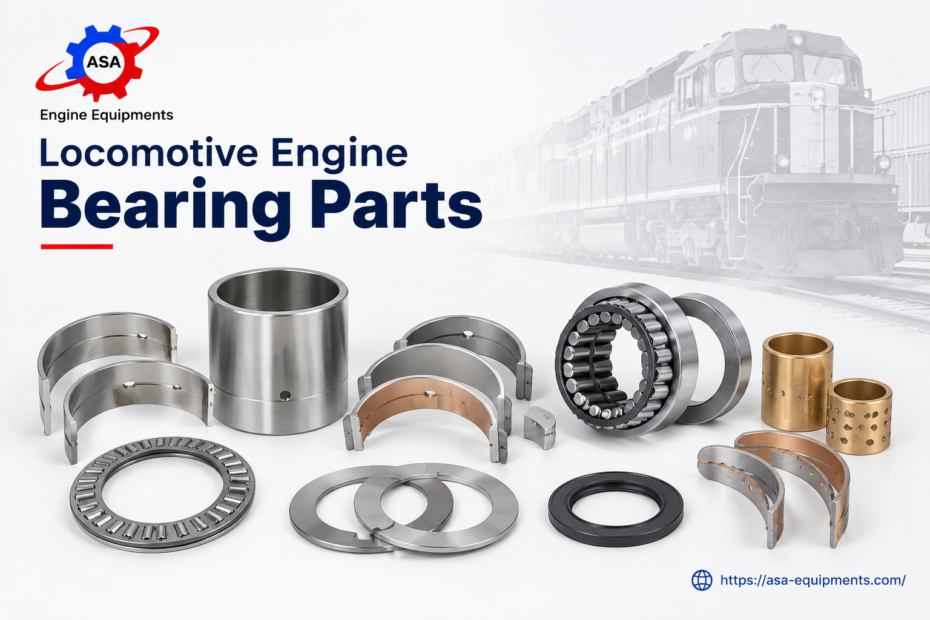
Bearings are among the most critical components inside any diesel locomotive engine. They support rotating shafts, absorb load stress, reduce friction, and keep an engine running smoothly under extreme heat and pressure. Without reliable Locomotive Engine Bearing Parts, even the most powerful ALCO Engine Parts, EMD Engine Parts, or GE Engine Parts setup can suffer premature wear, overheating, or complete failure.
For railroad operators, rebuilders, and marine industry professionals, sourcing the right Locomotive Engine Bearing Parts isn’t just about fitting a component — it’s about ensuring long-term engine reliability, reducing downtime, and protecting a major capital investment.
What Are Locomotive Engine Bearing Parts?
In simple terms, Locomotive Engine Bearing Parts are precision-machined components that sit between two moving parts — typically a rotating shaft and its housing — to minimize friction and support heavy mechanical loads.
Because locomotive engines operate under continuous heavy load, high temperatures, and constant vibration, these bearings must be manufactured to extremely tight tolerances using high-grade alloys. A poorly made or mismatched bearing can lead to metal-to-metal contact, seizure, and catastrophic engine damage — which is why sourcing genuine Locomotive Engine Bearing Parts from a trusted Locomotive Bearing Supplier is non-negotiable for serious operators.
Common Types of Engine Bearings Used in Locomotives
Different sections of a locomotive engine require different bearing designs, each engineered for a specific load and rotation pattern.
- Main Bearings – Support the crankshaft and absorb the primary combustion load
- Connecting Rod Bearings – Handle the reciprocating motion between the piston and crankshaft
- Camshaft Bearings – Reduce friction as the camshaft controls valve timing
- Thrust Bearings – Manage axial loads and keep the crankshaft properly positioned
- Turbocharger Bearings – Withstand extremely high rotational speeds and heat in the turbo assembly
Why Bearing Quality Matters for ALCO, EMD & GE Engines
ALCO Engine Parts, EMD Engine Parts, and GE Engine Parts each follow distinct design specifications, tolerances, and material requirements. A bearing that fits acceptably but wasn’t engineered to OEM specifications may cause vibration, uneven wear, or lubrication issues over time.
Performance and Reliability
High-quality Locomotive Engine Bearing Parts are manufactured from wear-resistant alloys and undergo strict dimensional checks. This ensures smooth rotation, consistent oil film retention, and stable performance even under the punishing duty cycles that railroad and marine engines experience daily.
Compatibility Across Engine Families
Since ALCO Engine Parts, EMD Engine Parts, and GE Engine Parts each use different bearing dimensions and metallurgical specifications, working with a Locomotive Bearing Supplier experienced across all three engine families ensures the parts you receive are properly matched — not generic substitutes that only “sort of” fit.
How Locomotive Bearings Are Manufactured
Manufacturing precision Locomotive Engine Bearing Parts is a multi-stage process that combines metallurgy, machining, and rigorous quality control.
- Material Selection – Manufacturers choose alloys such as tin-based babbitt, bronze, or aluminum-based composites depending on the load and application
- Precision Machining – Components are turned and bored to exacting tolerances using CNC machinery
- Surface Treatment – Bearings often receive coatings or overlays to improve wear resistance and reduce friction
- Dimensional Inspection – Every batch is measured against OEM drawings to confirm fit and clearance specifications
- Quality Certification – Reputable suppliers test parts against ISO 9001 and IATF 16949 quality management standards before shipment
This level of process control is what separates a reliable Locomotive Bearing Supplier from a low-cost, inconsistent one.
Signs Your Locomotive Needs New Bearing Parts
Recognizing early warning signs can prevent minor bearing wear from turning into a major engine failure.
- Unusual knocking or rumbling noise from the engine block
- Metal shavings or discoloration found in oil samples during routine analysis
- Rising oil temperature or unexplained pressure drops
- Increased vibration during operation
- Visible scoring or pitting on removed bearing surfaces during inspection
Routine oil analysis and scheduled teardown inspections remain the most effective way to catch worn Locomotive Engine Bearing Parts before they escalate into unplanned downtime.
Choosing the Right Locomotive Bearing Supplier
Not every parts supplier can deliver the precision and consistency that railroad, rebuilding, and marine operations demand. When evaluating a Locomotive Bearing Supplier, consider the following factors.
Manufacturing Standards and Certifications
Look for a Locomotive Bearing Supplier that sources from ISO 9001 and IATF 16949 certified manufacturers. These certifications indicate a documented, repeatable quality process — not just a one-time inspection.
Reverse Engineering Capability
Older or discontinued locomotive models sometimes require Locomotive Engine Bearing Parts that are no longer in standard production. A capable supplier should be able to reverse-engineer obsolete components from customer drawings or physical samples.
Warranty and After-Sales Support
A confident Locomotive Bearing Supplier stands behind their parts. Look for warranty coverage against material or workmanship defects, along with responsive customer support for technical questions.
Global Delivery and Lead Times
For fleets operating across multiple countries, consistent lead times and dependable export logistics matter just as much as part quality itself.
Why Choose ASA Engine Equipments
ASA Engine Equipments has spent over 20 years supplying Locomotive Engine Bearing Parts and other engine components to railroad operators, rebuilders, and industrial clients worldwide. The company specializes in aftermarket ALCO Engine Parts, EMD Engine Parts, and GE Engine Parts, working with ISO 9001 and IATF 16949 certified manufacturing partners who also supply OEMs such as Indian Railways (DLW).
Beyond bearings, ASA Engine Equipments supplies a full range of engine components, including gears and pinions, piston pins, connecting rod forks and blades, manifold assemblies, and turbocharger parts — all backed by a 12-month warranty against material or workmanship defects. Their engineering team also supports reverse engineering for hard-to-source or discontinued parts, based on customer drawings or physical samples.
Final Thoughts
Locomotive Engine Bearing Parts may be small in size, but their role in keeping ALCO Engine Parts, EMD Engine Parts, and GE Engine Parts running reliably is enormous. Choosing precision-manufactured, OEM-equivalent bearings from an experienced Locomotive Bearing Supplier helps railroad and marine operators avoid costly downtime and extend the working life of their fleet.