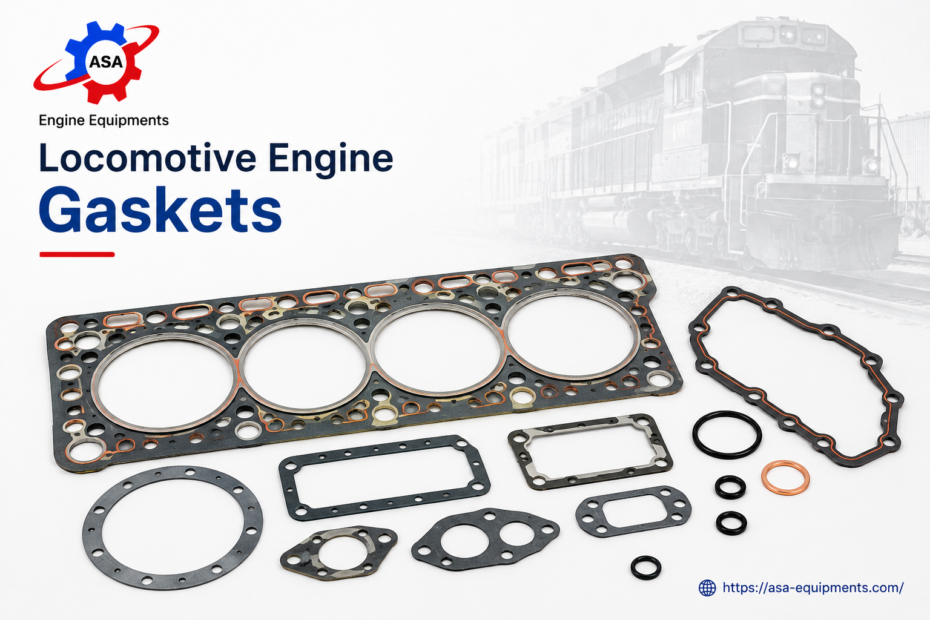
When it comes to keeping heavy-duty diesel-electric locomotives running without unplanned downtime, few components matter as much as the seals that hold every subsystem together. Locomotive Engine Gaskets are the unsung heroes of railroad maintenance — small in size but enormous in impact. Whether you operate a fleet built around the legendary EMD 567, the widely-used 645, or the modern 710 platform, sourcing the right aftermarket gasket sets can mean the difference between a smooth overhaul and a costly repeat failure.
In this guide, we’ll walk through why gasket quality matters, what to look for in a replacement set, and how choosing dependable Locomotive Engine Gaskets Engine components protects your investment for the long haul.
Why Gasket Integrity Matters in Locomotive Diesel Engines
Locomotive prime movers operate under extreme thermal cycling, high compression, and constant vibration. Every cylinder head, oil pan, water manifold, and turbocharger junction relies on a properly engineered gasket to maintain pressure and prevent leaks. A single degraded seal can lead to coolant contamination, oil dilution, or loss of compression — problems that quickly escalate into expensive engine-out repairs.
The Cost of Cutting Corners
Railroads and shortline operators that use substandard sealing materials often find themselves back in the shop within months. Cheap, ill-fitting gaskets tend to shrink, harden, or blow out under the sustained heat loads these engines generate. Investing in a well-made gasket set up front is almost always cheaper than repeated emergency repairs, lost service hours, and the labor cost of re-teardown.
Matching the Right Set to the Right Engine Family
Not all locomotive diesels are built the same, and gasket geometry differs significantly across EMD’s engine generations. This is where knowing your engine family becomes essential before ordering parts.
567 Engine Gaskets: Built for a Railroading Legacy
The EMD 567 series powered generations of American railroading, and many of these engines remain in active or restoration service today. 567 Engine Gaskets must account for the older bore spacing, liner configuration, and head-to-block sealing surfaces specific to this generation.
Common Wear Points on the 567
- Cylinder head gaskets exposed to repeated thermal expansion
- Liner O-rings that harden with age and heat cycling
- Oil pan and gear case gaskets prone to seepage over decades of service
A precision-fit replacement set restores the original sealing tolerances, which is especially important for heritage and tourist railroads keeping vintage 567-powered units on the rails.
645 Engine Gaskets: The Workhorse Standard
The EMD 645 remains one of the most widely deployed locomotive engines in North America, found in countless road switchers, freight units, and yard locomotives. 645 Engine Gaskets need to handle higher horsepower ratings and turbocharged variants compared to the earlier 567 platform.
What to Check When Replacing 645 Gaskets
- Cylinder head sets — confirm compatibility with both naturally aspirated and turbocharged configurations
- Water pump and manifold gaskets — critical for preventing coolant cross-contamination
- Crankcase and oil pan seals — must withstand constant vibration without loosening
Because the 645 exists in so many sub-variants (645E, 645E3, 645F, and more), verifying exact part compatibility before purchase is essential to avoid installation delays.
Turbocharged vs. Naturally Aspirated Considerations
Turbocharged 645 engines run at higher internal pressures, which places additional stress on manifold and exhaust gaskets. Choosing a set specifically rated for turbocharged service — rather than a generic universal fit — reduces the risk of premature blow-out at high-load operating points.
710 Engine Gaskets: Engineered for Modern Demands
EMD’s 710 series represents the evolution of the locomotive diesel platform, offering improved fuel efficiency, higher output, and tighter emissions control. 710 Engine Gaskets are manufactured to accommodate revised combustion chamber designs and updated cooling passages that differ meaningfully from the 567 and 645 lineage.
Key Differences from Earlier Platforms
- Revised head bolt torque patterns requiring gaskets rated for higher clamping loads
- Updated liner seal designs to match modern combustion pressures
- Enhanced heat-resistant compounds suited to tighter emissions and higher duty cycles
Operators running 710-powered locomotives in mainline freight service need gasket sets that can reliably handle continuous high-output operation without degrading between scheduled maintenance intervals.
What Makes an Aftermarket Gasket Set “Reliable”
Not every aftermarket supplier delivers the same quality, so it pays to know what separates a dependable set from a risky one.
Material Quality
Look for gaskets made from heat-resistant composite materials, graphite-reinforced facings, or multi-layer steel (MLS) construction where applicable. These materials hold up far better under repeated thermal cycling than generic fiber gaskets.
Precision Manufacturing Tolerances
A quality aftermarket gasket set is manufactured to match OEM specifications exactly — bolt hole placement, thickness, and compression characteristics all need to mirror the original design. Even minor dimensional deviations can cause uneven sealing pressure and premature failure.
Complete Kit Coverage
The best sets include every gasket needed for a full overhaul in one package — cylinder head, oil pan, water manifold, turbo, gear case, and accessory drive gaskets — so maintenance crews aren’t stuck sourcing individual pieces mid-rebuild.
Supplier Track Record
Choose suppliers with a demonstrated history serving the locomotive and heavy-duty diesel aftermarket, ideally ones who understand the specific demands of 567, 645, and 710 engine families rather than treating locomotive parts as an afterthought to automotive or industrial catalogs.
Tips for Installing Locomotive Engine Gaskets Correctly
Even the best Locomotive Engine Gaskets Engine components can fail prematurely if installation isn’t handled properly.
Surface Preparation
Thoroughly clean and inspect mating surfaces for warping, pitting, or old gasket residue before installing a new seal. Any imperfection on the sealing surface can undermine even a perfectly manufactured gasket.
Correct Torque Sequence
Follow the manufacturer’s specified torque sequence and value for head bolts and manifold fasteners. Uneven or incorrect torque is one of the leading causes of early gasket failure, regardless of gasket quality.
Avoid Reusing Old Gaskets
It may be tempting to reuse a gasket that “looks fine,” but compression sets permanently deform sealing materials. Always install fresh gaskets during any teardown that exposes a sealing surface.
Choosing the Right Supplier for Your Fleet
Whether you’re maintaining a single heritage unit or managing a fleet of active freight locomotives, sourcing Locomotive Engine Gaskets from a supplier who specializes in 567, 645, and 710 platforms ensures you get correctly engineered, application-specific parts rather than generic substitutes. A trustworthy aftermarket partner should offer:
- Verified fitment for your specific engine variant
- Consistent material quality across every order
- Responsive support for identifying the right part numbers
- Competitive turnaround times to minimize locomotive downtime
Final Thoughts
Reliable sealing is foundational to locomotive engine performance, and the right gasket set protects both your equipment and your maintenance budget. Whether you’re rebuilding a classic 567, servicing a fleet of 645-powered units, or maintaining modern 710 engines, choosing precision-engineered, application-specific Locomotive Engine Gaskets Engine components is one of the smartest investments you can make in long-term reliability. Partnering with a specialized aftermarket supplier who understands these engine families ensures every rebuild goes back into service leak-free and ready for the long haul.